

Introduction: The Blended Funding Advantage for UK CICs
Community Interest Companies (CICs) occupy a unique and vital space within the UK's social economy. Designed to use business principles for social good, CICs often find themselves navigating a tricky financial landscape. Relying solely on grants can lead to instability, while a pure commercial model might compromise their social mission. The sweet spot, for many, is a blended funding approach: combining grant income with earned revenue from trading.
This strategy isn't just about financial survival; it's about building resilience, sustainability, and ultimately, a greater capacity to deliver on your social purpose. By integrating diverse income streams, CICs can mitigate risks, invest in innovation, and ensure their impact continues for the long term. This article will explore how UK CICs can master this blend, maintaining funder trust and maximising their social value.
Key takeaways
- Sustainable UK CICs often combine grants for social outcomes with trading income for core costs and independence.
- A balanced portfolio of income streams minimises reliance on single sources and enhances long-term viability.
- Transparency and clear accounting are crucial when blending funds to maintain funder confidence.
- Strategic investment of trading surplus back into social activities reinforces your CIC's purpose.
Why Blend? The Stability and Impact Equation
Imagine a scenario where your CIC's entire programme depends on a single grant. What happens if that grant isn't renewed? Or if the funder's priorities shift? This vulnerability is precisely what a blended funding model aims to address. By diversifying your income, you create a financial safety net that allows your CIC to weather economic downturns, adapt to changing social needs, and plan for the future with greater confidence.
Moreover, trading income offers a level of flexibility rarely found in grant funding. While grants often come with strict reporting requirements and expenditure guidelines, earned revenue can be reinvested into areas that need it most, such as capacity building, innovation, or covering essential unrestricted costs. This doesn't mean grants are secondary; rather, they become a powerful lever to fund specific, often hard-to-monetise social outcomes, while trading income provides the foundational stability.
"A CIC that successfully blends income isn't just financially robust; it demonstrates a sophisticated understanding of its market, its mission, and its path to sustained impact."
Structuring Your Blended Model: Clarity is Key
The core principle of blending funds successfully is clarity. Both internally and externally, you need to clearly define what each income stream is funding and how it contributes to your overall social mission. This transparency is particularly important for grant funders, who want to ensure their money is having the intended impact and not simply subsidising commercial activities. Your governing document as a CIC, the Articles of Association, are a good place to start, clearly outlining your social purpose.
A common approach is to differentiate between activities that are directly fundable through grants (e.g., a specific outreach programme for vulnerable individuals) and those that generate income (e.g., selling handmade goods made by beneficiaries, offering consultancy services, or hosting paid events). The trading income can then cover overheads, invest in new products or services, or expand the reach of your social programmes.
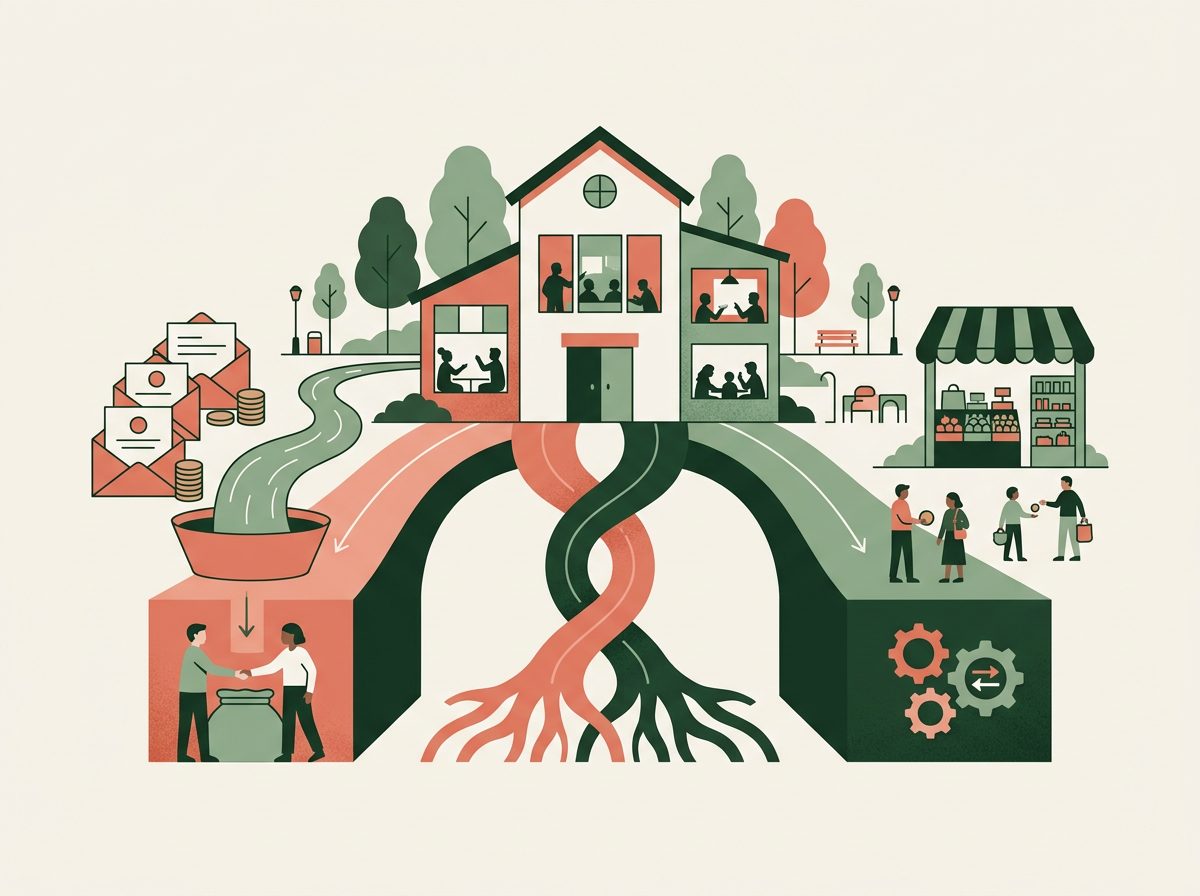
Consider establishing distinct lines within your budgeting and accounting systems to track income and expenditure for grant-funded and trading activities separately. While a CIC is a single legal entity, internal financial segmentation can help demonstrate accountability and impact. This doesn't mean creating two separate organisations, but rather two clear financial narratives within one.
Accounting for a Blended Model
Your financial records should clearly distinguish between income streams. This isn't just for external reporting but also for internal strategic planning. You need to understand which activities are profit-generating, which are cost-neutral, and which require grant subsidy to achieve their social aims. This level of detail allows you to make informed decisions about where to invest resources and how to refine your business model.
| Income Type | Purpose within CIC | Typical Funder/Source | Key Consideration |
|---|---|---|---|
| Grants | Funding specific social outcomes, pilot projects, capacity building | Trusts, Foundations, Government bodies, Lottery | Restricted funds, strict reporting |
| Trading Income | Covering core costs, unrestricted investment, subsidising social activities | Customers, clients, service users | Market competitiveness, profit margin |
| Donations | Unrestricted funding, quick response needs | Individuals, corporate giving | Less predictable, often smaller amounts |
| Contracts (Public) | Delivering public services, often outcome-based | Local authorities, NHS | Competitive tendering, performance metrics |
Maintaining Funder Trust and Avoiding Perverse Incentives
One of the primary concerns for funders when a CIC has trading income is ensuring their grant isn't simply supplementing a commercial venture. Transparency is your greatest asset here. Be upfront about your blended model in your grant applications. Explain how your trading activities support your social mission and how grant funding enables additional impact that wouldn't be possible through earned income alone.
For example, if your CIC runs a café to employ young people with learning disabilities, the café's trading income might cover staff wages and operational costs. A grant, however, could fund specialised training programmes for those employees, a mentorship scheme, or the development of new support materials – activities that are clearly 'beyond business as usual' for the café itself.
It's also crucial to demonstrate that any trading surplus is reinvested back into your social mission as per your CIC's asset lock. Funders want to see that the primary beneficiary of any financial success is the community you serve, not private shareholders or excessive profits for directors.
Developing Your Trading Arm: Impact at Every Step
When developing your trading activities, aim for alignment with your social mission. The most powerful blended models are those where trading income is intrinsically linked to the social purpose. For example, a CIC combating food waste might run a catering business using salvaged ingredients, or a CIC promoting digital inclusion might offer affordable tech repair services.
Consider the "double bottom line" – not just financial return, but social return on investment. Can your trading activities employ beneficiaries, provide training, or raise awareness for your cause? This deeper integration makes your trading arm more than just a fundraiser; it becomes an extension of your impact.
Checklist for an Integrated Trading Arm
- Does the trading activity align with your CIC's social mission?
- Does it create opportunities for beneficiaries (employment, training, skill development)?
- Is the pricing fair and competitive, reflecting your social value?
- Are the legal and financial structures clear and compliant?
- Have you assessed the market demand and potential for profitability?
- Do you have the necessary skills and resources to run a successful trading venture?
The Strategic Investment of Surplus
One of the distinct advantages of a CIC is the asset lock, which ensures that any profits or assets are used for community benefit. This is particularly relevant when considering your trading surplus. Rather than seeing this as 'profit' in a conventional sense, view it as an opportunity to further your social mission. This could involve:
- Expanding existing social programmes.
- Piloting new initiatives that address emerging community needs.
- Investing in staff development and training.
- Building financial reserves for future resilience.
- Purchasing essential equipment for your social activities.
Clearly documenting how your trading surplus is reinvested demonstrates fiscal responsibility and reinforces your commitment to your community interest. This information is valuable for your Annual Community Interest Report, which helps maintain transparency and compliance with the CIC Regulator.
Building Resilience through a Diverse Portfolio
Remember that no single income stream is immune to change. Grant priorities can shift, economic downturns can impact trading income, and public contracts can be re-tendered. A truly resilient CIC has a diverse portfolio of funding streams, reducing over-reliance on any single source. This might include:
- A mix of larger, multi-year grants and smaller, project-specific grants.
- Multiple trading activities, catering to different markets or offering varied services.
- Exploring individual giving, corporate partnerships, or even small-scale social investment.
Regularly review your income strategy and identify potential vulnerabilities. Adaptability and foresight are crucial for long-term sustainability in the ever-evolving social sector funding landscape.
Next steps
Begin by mapping out your current income streams and their associated costs and benefits. Identify areas where trading income could naturally emerge from your existing social activities, or where grants could unlock new, impactful programmes. Seek advice from other successful CICs and, if necessary, professional accountants who understand the nuances of social enterprises. Your journey to a blended funding model is an iterative process of learning, adapting, and continuously striving for greater social impact and financial stability.