
“Community Interest Companies represent a vital and growing part of the UK’s social economy. Understanding their unique funding landscape is key to their success and their continued positive impact.” — Serin Editorial Team
As a Community Interest Company (CIC) in the UK, navigating the funding landscape can feel like piecing together a complex puzzle. While CICs share many characteristics with traditional charities, their legal structure means certain funding avenues are more accessible, and others, less so. This comprehensive guide aims to demystify funding for UK CICs in 2026, offering practical insights into where to look, what to expect, and how to position your organisation for success.
Unlike registered charities, CICs are designed to use their assets and profits for community benefit, but they can also distribute a limited amount of profits to shareholders. This hybrid nature makes them attractive to certain funders who appreciate the blend of social mission and business acumen. However, it also means CICs are ineligible for some of the funding streams specifically reserved for registered charities, such as most Gift Aid.
Understanding the CIC Funding Landscape
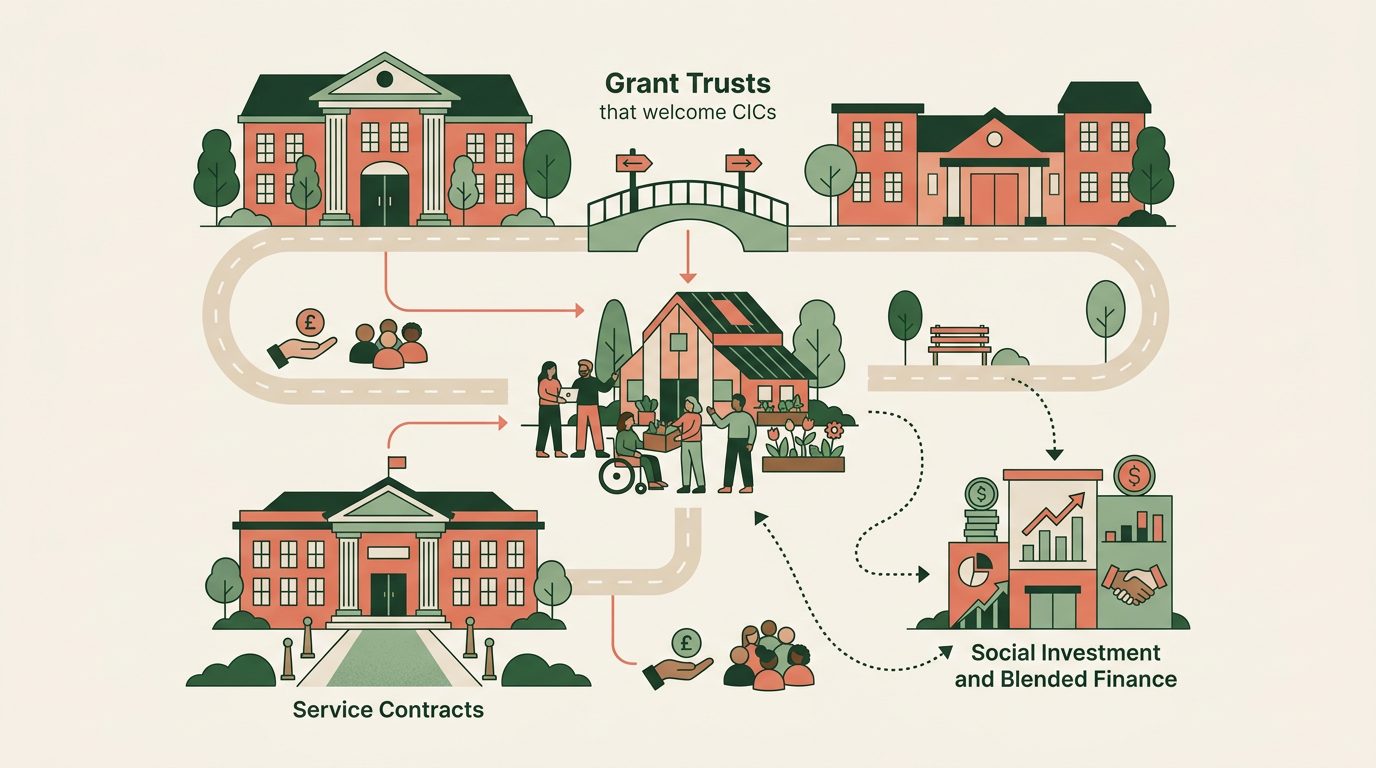
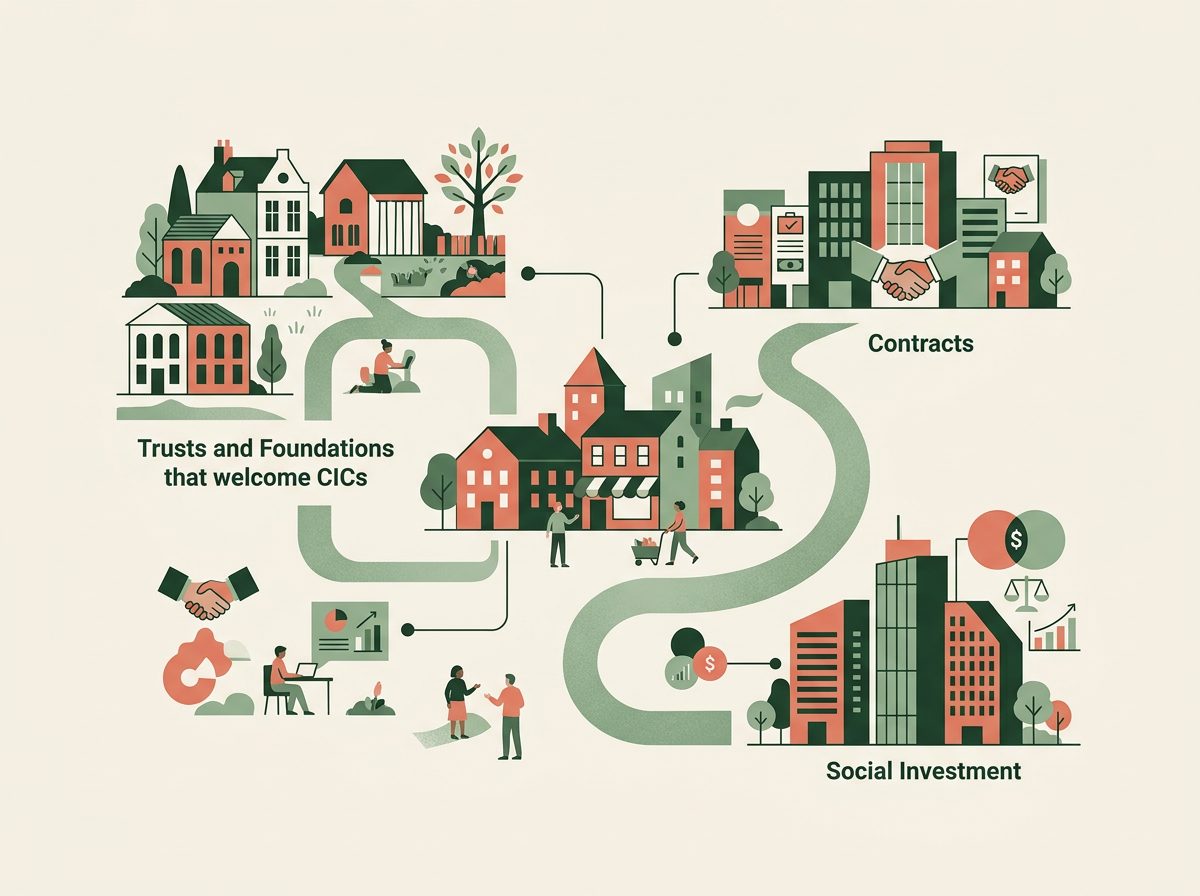
The good news is that the funding landscape for CICs is maturing and expanding. Many trusts and foundations now explicitly welcome applications from CICs, recognising their crucial role in delivering social value. Equally, the appetite for social investment continues to grow, and public sector contracting increasingly sees CICs as innovative and efficient delivery partners.
Key takeaways:
- CICs are distinct from charities, impacting funding eligibility.
- A growing number of trusts, foundations, and social investors now fund CICs.
- Public sector contracts are a significant opportunity for many CICs.
- Embrace your social mission and business model to appeal to diverse funders.
Successfully securing funding as a CIC requires a strategic approach. It's about confidently articulating your social impact, demonstrating a robust business model, and identifying the right funders who align with your mission and legal structure. This article will break down the primary funding sources, offering actionable advice to help your CIC thrive.
Trusts and Foundations: A Growing Opportunity
For many years, some grant-making trusts and foundations viewed CICs with caution, often preferring to fund registered charities. However, this trend is changing significantly. An increasing number of trusts now explicitly include CICs in their eligibility criteria, recognising their ability to deliver effective social impact with a more commercial lens.
When approaching trusts and foundations, it's crucial to highlight how your CIC generates social benefit. Clearly articulate your mission, the community you serve, and the measurable outcomes of your work. Funders are looking for impact, sustainability, and good governance, all of which well-run CICs can demonstrate.
Some prominent examples of funders that often support CICs include:
- Power to Change: This independent trust is dedicated to supporting community businesses in England, many of which are structured as CICs. They offer a range of grants and business support programmes.
- Access Foundation for Social Investment: While primarily focused on developing the social investment market, Access also runs programmes that provide grants and blended finance to social enterprises, including CICs, to help them become investment-ready.
- Lloyds Bank Foundation for England and Wales: This foundation supports small and local charities and CICs tackling disadvantage. Their focus is on funding core costs to help organisations become stronger.
- The National Lottery Community Fund: As the largest funder of community activity in the UK, the National Lottery Community Fund supports thousands of projects each year. Many of their programmes are open to CICs, particularly those focused on community-led initiatives and social action.
- Smaller, Local Trusts: Don't overlook smaller, regional, or local charitable trusts. Many of these have a deep understanding of local needs and are increasingly open to funding well-established local CICs that can demonstrate clear community benefit. Researching trusts specific to your geographical area and field of work is vital.
When applying for grants, always carefully read the eligibility criteria. If a funder states they only fund 'registered charities', then your CIC is unlikely to be successful. However, if they say 'not-for-profit organisations', 'social enterprises', or simply 'community organisations', then it's worth investigating further.
Public Sector Contracts: Delivering Services with Social Value
The public sector, including local authorities, NHS trusts, and central government departments, regularly commissions services that were traditionally delivered by the private or charity sectors. CICs are uniquely positioned to compete for these contracts, offering a compelling blend of professional service delivery and embedded social value.
Public procurement frameworks increasingly prioritise social value. This means that when bidding for contracts, your CIC's commitment to employment for local people, environmental sustainability, ethical supply chains, and community engagement can give you a significant advantage over purely commercial entities. Emphasise how your core activities contribute to broader social good, not just service delivery.
To succeed in winning public sector contracts:
- Monitor Procurement Portals: Regularly check websites like Contracts Finder, OJEU (Official Journal of the European Union, for larger contracts), and local authority procurement pages.
- Register as a Supplier: Ensure your CIC is registered on relevant supplier frameworks and portals.
- Build Relationships: Attend 'meet the buyer' events and network with commissioning officers. Understanding the needs and priorities of commissioners can be invaluable.
- Demonstrate Track Record: Highlight your experience, expertise, and ability to deliver high-quality services. Case studies and testimonials are powerful.
- Understand the Bidding Process: Public sector tenders can be detailed and require significant time investment. Be prepared to respond thoroughly to specifications and demonstrate compliance.
While the bidding process can be rigorous, securing a public sector contract often provides a stable, long-term income stream that can underpin your CIC's financial sustainability and allow it to scale its social impact.
Social Investment: Capital for Growth and Impact
Social investment refers to the use of repayable finance to achieve a social or environmental return as well as a financial return. This includes loans, bonds, equity, and quasi-equity. CICs are particularly well-suited to social investment because their legal structure allows them to trade, generate surplus, and repay capital, while their community interest lock ensures their social mission is protected.
Unlike grants, social investment needs to be repaid, often with interest. This means investors will scrutinise your CIC's business plan, financial projections, and capacity for growth. However, it also provides access to larger sums of capital than grants typically offer, enabling significant scale and innovation.
Types of social investment often available to CICs:
| Investment Type | Description | Typical Use |
|---|---|---|
| Loans | Repayable capital, often with interest, over a set period. | Working capital, asset purchase, growth financing. |
| Bonds | Similar to loans but often raised from multiple investors, appealing to community investors. | Large capital projects, community share offers. |
| Quasi-equity | Investment that has characteristics of both debt and equity, often with flexible repayment terms linked to performance. | Growth capital, strategic development. |
| Blended Finance | A mix of grant and social investment, often used to de-risk investment and make it more accessible. | Pilot projects, innovation, early-stage growth. |
Key social investors and intermediaries include:
- Big Society Capital: The UK's leading social investment wholesaler, investing in social investment funds and intermediaries who in turn lend to social enterprises.
- Social Investment Business (SIB): Provides loans and grants, particularly for earlier-stage social ventures.
- Resonance: Manages a range of social impact funds across different sectors, investing in mature social enterprises.
- Key Fund: Specialises in providing investment to community and social enterprises in the North of England, often offering smaller, more accessible loans.
- Crowdfunding Platforms: Platforms like Crowdfunder and Ethex allow CICs to raise finance, often through community shares or repayable loans, directly from their supporters and the wider public.
Approaching social investors requires a well-developed business plan, a clear articulation of your social impact, and robust financial projections. Many social investors also offer business support and readiness programmes to help CICs prepare for investment.
Earned Income and Trading Activities
A fundamental strength of the CIC model is its ability to generate income through trading activities. This can provide a stable, independent, and unrestricted source of funding, reducing reliance on grants and contracts.
For example, a CIC running a community cafe might generate income from food and drink sales, using the surplus to fund its social programmes. A CIC offering environmental consultancy services might use profits to support local conservation projects. The key is that the trading activity should ideally be directly related to or complementary to your social mission.
Strategies for successful earned income:
- Identify Market Opportunities: What services or products can your CIC offer that meet a genuine need and people are willing to pay for?
- Develop a Robust Business Plan: Treat your trading activities like any other business venture, with clear financial targets, marketing strategies, and operational plans.
- Price Prudently: Ensure your pricing covers costs and generates a surplus that can be reinvested into your social impact.
- Market and Promote: Effectively communicate the social benefit associated with purchasing from your CIC to attract customers who want to make a difference.
- Innovate: Look for new ways to generate income that align with your mission.
While earned income offers significant independence, it also requires business acumen and a focus on financial sustainability. Striking the right balance between social mission and commercial viability is essential for long-term success.
Looking Ahead: Positioning for 2026 and Beyond
The funding landscape for CICs is dynamic and evolving. Organisations that are agile, transparent, and demonstrably impactful will be best placed to secure funding in 2026 and beyond. Focus on building strong relationships with potential funders, clearly articulating your social value, and ensuring your governance and financial management are robust.
Remember, funding is not just about money; it's about building partnerships that enable your CIC to achieve its mission. By understanding the diverse funding avenues available, from grants and contracts to social investment and earned income, your CIC can build a sustainable financial model that maximises its positive impact on the community.
Next steps
Begin by mapping out your current funding needs and exploring the eligibility criteria of the trusts, social investors, and public sector opportunities mentioned above. Develop a compelling narrative that clearly links your CIC's activities to tangible social impact, and don't hesitate to seek bespoke advice from organisations specialising in social enterprise finance if you require it.