
Navigating the Funding Landscape: Outcomes versus Outputs in UK Charities
In the competitive world of charity funding, understanding and articulating the difference between 'outcomes' and 'outputs' is not just good practice; it's often the deciding factor in securing a grant. Many well-meaning organisations, especially smaller ones or those new to grant applications, inadvertently undermine their chances by focusing solely on what they do, rather than the meaningful change they create. This article aims to demystify these two crucial concepts, providing a plain-English guide with practical UK examples to help your charity or CIC win the funding it deserves.
Funders, whether large trusts, government bodies, or corporate foundations, are increasingly sophisticated in their expectations. They aren't just interested in how many workshops you run or how many meals you serve; they want to know the tangible improvement or change brought about by those activities. Confusing outputs with outcomes is, unfortunately, one of the fastest ways to have your application passed over.
Key takeaway: Funders invest in change, not just activity. Focus on the 'why' and 'how people are better' when telling your story.
Let's start by laying the groundwork for a clearer understanding.
- Outputs are what you do: the direct products or results of your activities (e.g., workshops delivered, meals served).
- Outcomes are the changes for people: the differences, benefits, or learning that happen as a result of your activities (e.g., improved wellbeing, enhanced job prospects, stronger community cohesion).
- Funders fund outcomes: They want to see the positive impact your work has on individuals, communities, or the environment.
Defining Outputs: The 'What' of Your Work
Outputs are the readily quantifiable, immediate results of your project activities. They are the things you can count, often reflecting the volume or scale of your work. Think of them as the 'ingredients' and 'actions' within your programmatic recipe. They're important because they demonstrate that your project is actually happening and reaching its intended beneficiaries, but they don't tell the whole story of impact.
For a UK food bank, typical outputs might include:
- Number of food parcels distributed.
- Number of individuals receiving emergency food aid.
- Number of volunteer hours contributed.
- Number of community partners engaged.
These figures are vital for operational reporting and show efficiency. However, in isolation, they don't tell a funder if the food parcels led to reduced hunger, better health, or less stress for the recipients. This is where outcomes become essential.
Understanding Outcomes: The 'So What?' of Your Impact
Outcomes are the changes, benefits, learning, or other effects that happen to individuals, groups, or organisations as a result of your activities or services. They answer the crucial 'So what?' question. Outcomes are about the difference you make in people's lives and are often more qualitative, although they can still be measured and evidenced.
There are generally three types of outcomes:
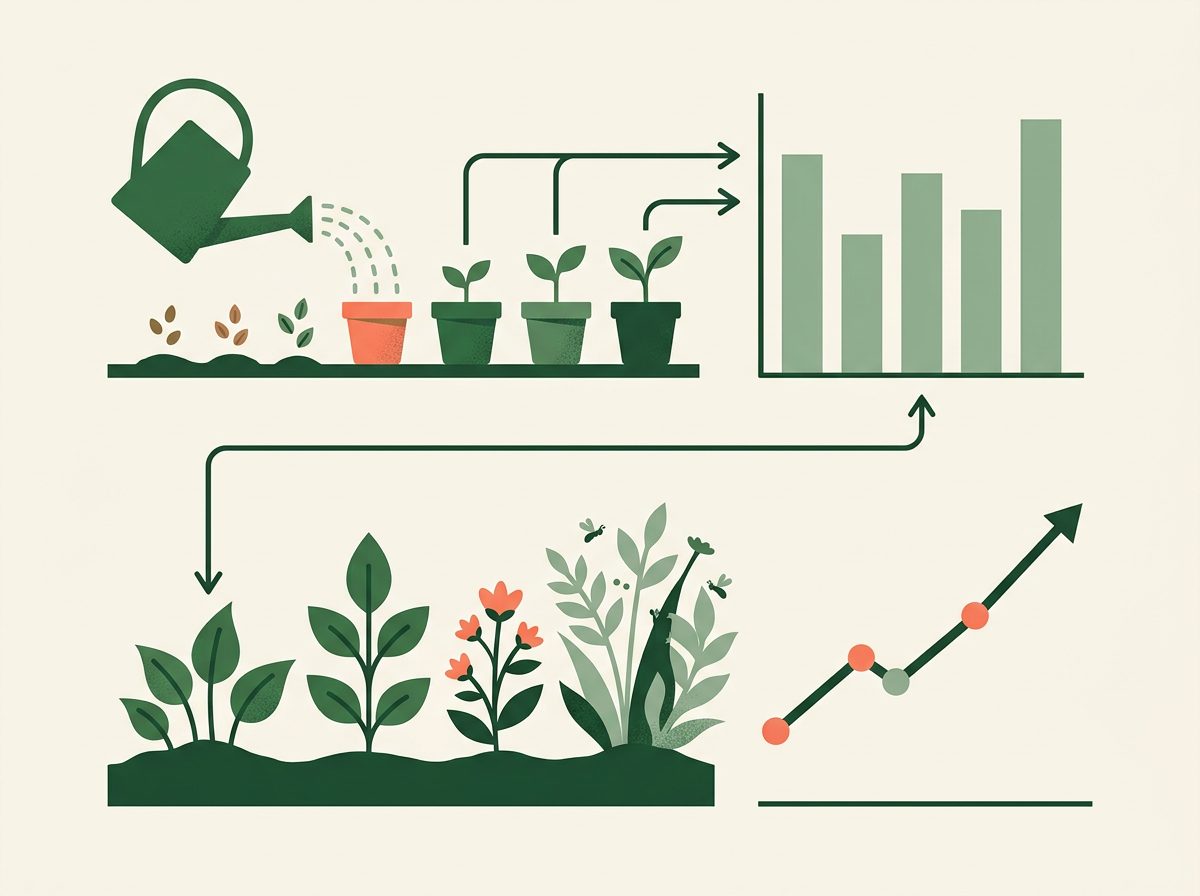
- Short-term outcomes: Immediate changes occurring directly after an activity. For example, participants in a mental health workshop feel a temporary reduction in stress.
- Medium-term outcomes: Changes that happen over a slightly longer period due to continued engagement or the accumulated effect of activities. For example, participants in a mental health workshop report sustained improvements in coping mechanisms and daily wellbeing.
- Long-term outcomes: The ultimate, significant changes you hope to achieve over an extended period, often at a societal or community level. For example, reduced rates of mental illness in the community, leading to improved social cohesion and economic participation. These are often referred to as 'impacts'.
When writing funding applications, you will most frequently focus on short- and medium-term outcomes, demonstrating how your project directly contributes to these changes.
The Critical Distinction for Funding Success
Funders are not simply looking to fund activities; they are looking to invest in solutions to problems. They want to see a return on their investment in the form of positive change. When you apply for a grant, you are essentially asking a funder to join you in solving a particular issue. Simply listing outputs doesn't make a compelling case for investment.
Consider two applications for a project supporting young carers:
| Application A (Output-focused) | Application B (Outcome-focused) |
|---|---|
| We will run 5 weekly support groups. | Young carers will report improved feelings of loneliness and isolation. |
| We will provide 20 one-to-one counselling sessions. | Young carers will develop improved coping strategies and resilience. |
| We will host 3 respite activity days. | Young carers will experience a reduction in stress and an increase in personal wellbeing. |
Application B clearly articulates the positive changes the project aims to create in the lives of young carers. It connects the activities (implied by the outcomes) to tangible benefits, which is far more persuasive to a funder.
Key takeaway: Always articulate the positive changes your project aims to create in the lives of your beneficiaries.
Moving from Outputs to Outcomes: A Practical Exercise
Here's a simple process to help you transform your output-focused thinking into outcome-focused statements:
- Identify your core activities: What do you physically do?
- Ask 'So what?': For each activity, ask yourself, 'So what happens as a result of this activity for the people we help?'
- Ask 'Then what?': Keep pushing. 'If X happens, then what changes for them?'
- Frame as a positive change: Outcomes should generally be phrased as positive improvements or benefits.
Let's take an example for a community gardening project in UK urban areas:
- Activity: Running weekly gardening sessions for local residents.
- Output: 48 gardening sessions delivered; 150 unique residents participated; 3 new communal garden beds established.
- 'So what?' for residents: They learn new skills, spend time outdoors, meet neighbours.
- 'Then what?' (Outcome): Residents report increased knowledge of horticulture (short-term); Residents form new social connections, reducing feelings of isolation (medium-term); Residents experience improved mental and physical wellbeing (medium-term); The community enjoys a greener, more pleasant local environment (medium-term/long-term societal impact).
By following this line of questioning, you naturally shift your focus from merely describing your work to explaining the profound difference it makes.
Measuring Success: Indicators of Change
Once you've defined your outcomes, the next step is to consider how you will measure them. This is where 'indicators' come in. Indicators are specific, measurable pieces of information that tell you if an outcome has been achieved, or if progress is being made towards it.
- Outcome: Participants in our digital skills workshops will feel more confident using online services.
- Potential Indicators: Percentage of participants reporting 'very confident' or 'confident' in pre- and post-workshop surveys; number of participants subsequently accessing online government services independently; qualitative feedback noting increased confidence.
Funders will expect you to think through not just what you want to achieve, but how you will prove you've achieved it. This doesn't always mean complex scientific studies. Simple surveys, feedback forms, attendance records, case studies, and observational notes can all serve as valid indicators, especially for smaller charities.
Key takeaway: Outcomes are the changes; indicators are how you measure those changes.
When selecting indicators, aim for them to be SMART: Specific, Measurable, Achievable, Relevant, and Time-bound. This helps ensure your impact measurement plans are realistic and effective.
Common Pitfalls and How to Avoid Them
Even seasoned grant writers can sometimes slip into output-focused language. Be vigilant for these common mistakes:
- Describing activities instead of changes.
- Using vague language like 'we will help people' without specifying the change.
- Focusing solely on the volume of service delivery.
- Not linking outcomes directly to the needs identified in your application.
- Failing to consider how outcomes will be measured.
A good trick is to use phrases that signal an outcome, such as 'increased...', 'reduced...', 'improved...', 'enhanced...', 'developed...', 'greater understanding of...'. These phrases immediately orient the reader towards the change your project creates.
Next Steps
Now that you understand the crucial distinction between outputs and outcomes, review your current project descriptions and funding applications. Can you clearly articulate the outcomes your work achieves? Are your outcomes measurable? By embracing an outcome-focused approach, you'll not only strengthen your funding applications but also gain a deeper understanding of your own impact, enabling your charity to better communicate its value and secure the vital funds it needs to deliver meaningful change in the UK.