Why Funders Value a Robust Board Skills Audit
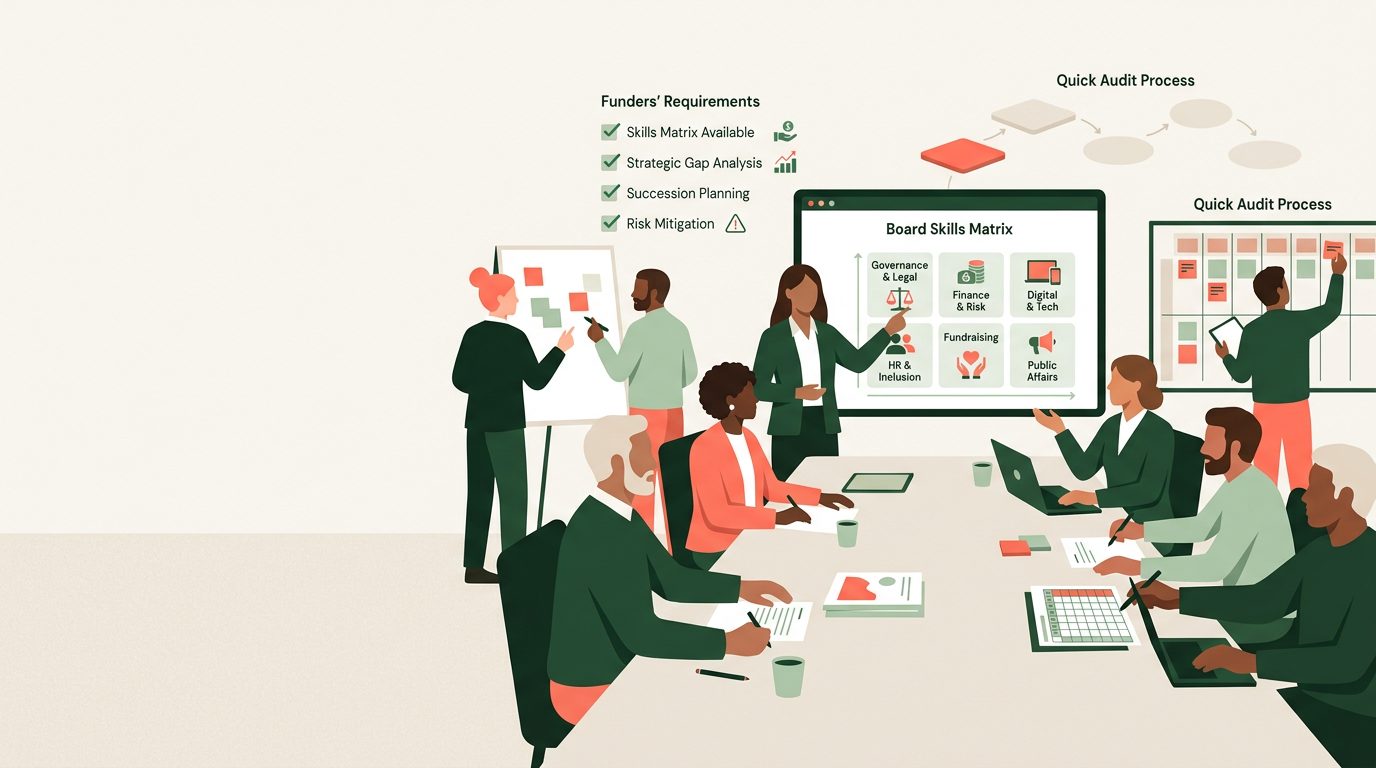
In today's competitive funding landscape, charities and CICs are increasingly expected to demonstrate exceptional governance. Funders, whether large trusts, foundations, or government bodies, are looking beyond just the impact of your services. They want assurance that your organisation is well-managed, resilient, and equipped for future challenges. A robust board skills audit is a key tool in providing this assurance.
A board skills audit isn't merely a tick-box exercise; it's a strategic process that reveals the strengths and potential gaps within your trustee board. By clearly understanding the collective expertise, experience, and perspectives around your board table, you can make informed decisions about recruitment, training, and strategic planning. This proactive approach to governance demonstrates foresight and professionalism, which are highly attractive qualities to potential funders.
Key Takeaways:
- A board skills audit maps trustee skills, experience, lived experience, and demographics against organisational needs.
- It's a crucial tool for demonstrating strong governance to funders.
- Refresh your audit annually to guide recruitment and strategic development.
What Exactly is a Board Skills Audit?
At its core, a board skills audit is a systematic assessment of the capabilities and attributes present amongst your trustees. It goes beyond just professional qualifications, delving into areas such as sector-specific knowledge, strategic planning acumen, financial expertise, fundraising experience, legal understanding, and crucially, lived experience relating to your beneficiary group.
The audit creates a comprehensive picture, often in a matrix format, that allows you to visualise where your board is strong and where there might be areas for development. It should reflect both the current needs of your organisation and anticipated future requirements, ensuring your governance structure remains fit for purpose as your charity evolves.
Crafting Your Skills Matrix: What to Include
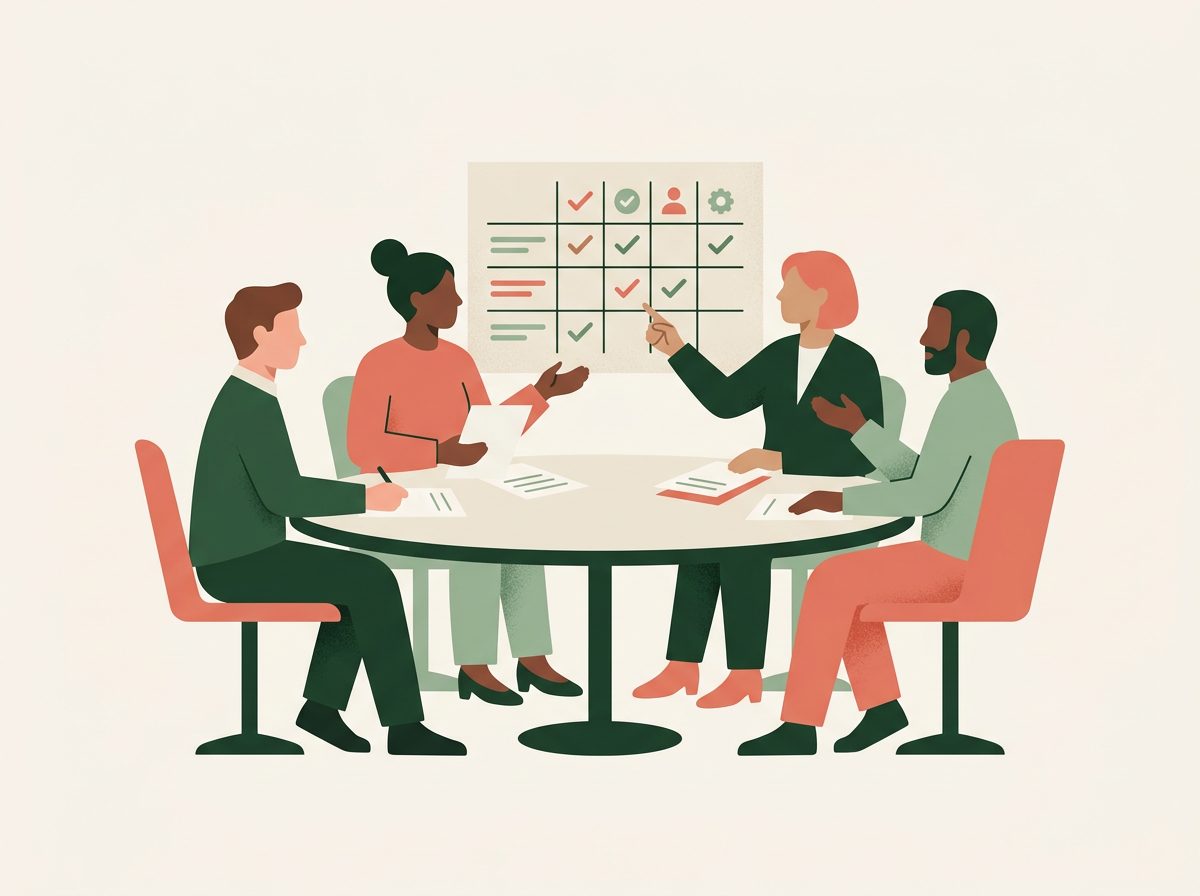
A well-designed skills matrix is the backbone of your audit. It should be tailored to your charity's unique context, mission, and strategic goals. Consider both core governance competencies and specific skills vital to your operational success. Here’s a breakdown of essential categories:
- Core Governance:
- Strategic Planning
- Financial Management and Oversight
- Risk Management
- Legal and Regulatory Compliance (e.g., Charity Commission, Companies House)
- Safeguarding
- Operational & Sector Specific:
- Fundraising and Philanthropy
- Marketing, Communications, and Digital Engagement
- HR and People Management
- Service Delivery and Programme Management
- Specific sector knowledge (e.g., environmental science, youth work, mental health)
- Personal Attributes & Perspectives:
- Leadership and Teamwork
- Critical Thinking and Problem Solving
- Networking and Advocacy
- Lived experience relevant to beneficiaries
- Diversity of thought, background, and demographics (age, ethnicity, disability, gender identity, socio-economic background)
For each skill, trustees should self-assess their proficiency, typically on a scale (e.g., basic, competent, expert). You might also ask them to indicate their interest in developing certain skills further. This provides a holistic view of both current capacity and future potential.
"A strong board skills audit isn't just about identifying gaps, it's about celebrating the rich tapestry of skills and experiences already present, and strategically building on that foundation to drive your charity forward."
How to Conduct a Board Skills Audit Efficiently
Running a skills audit doesn't have to be a daunting or time-consuming task. With careful planning, it can be completed effectively, perhaps even during a board away day or as a pre-board meeting exercise.
- Define Your Requirements: Before involving trustees, the Chair and CEO (or a small working group) should identify the key skills and experiences currently needed and those anticipated for the next 3-5 years. What are your strategic priorities? What challenges or opportunities lie ahead?
- Design Your Audit Tool: Create a clear, easy-to-understand matrix or questionnaire based on the identified requirements. Use a consistent rating scale for proficiency. Consider using an online survey tool to streamline data collection.
- Trustee Engagement: Ask each trustee to complete the audit individually and confidentially. Emphasise that this is an exercise in collective strength building, not an individual performance review. Encourage honest self-assessment.
- Collate and Analyse Data: Once all responses are in, compile the data into a master matrix. Look for patterns, strengths, and areas where the board might be over-reliant on one or two individuals, or where there are significant gaps.
- Review and Discuss: Present the anonymised, aggregated results to the full board. Facilitate an open discussion about the findings. What does the audit tell you about the board's collective capability? Where are the critical gaps?
- Develop an Action Plan: This is the most crucial step. Based on the discussion, create a clear action plan. This might include targeting specific skills in future trustee recruitment, offering training or mentoring to existing trustees, or delegating oversight of certain areas to subgroups.
Using Your Audit for Strategic Trustee Recruitment
One of the most powerful outcomes of a board skills audit is its ability to inform your trustee recruitment strategy. Instead of simply seeking 'good people', you can recruit for specific, identified needs.
For example, if your audit reveals a lack of digital marketing expertise, your next trustee recruitment drive can explicitly seek candidates with this background. Similarly, if you serve a specific community, and your board lacks trustees with lived experience from that community, the audit provides a clear mandate to diversify your board composition. This targeted approach not only strengthens your governance but also ensures your board is truly representative and responsive to your beneficiaries.
| Skill Gap Identified | Recruitment Strategy | Funder Perception |
|---|---|---|
| Lack of robust financial expertise | Seek a trustee with chartered accountancy background | Strong financial oversight, risk management |
| Limited digital fundraising knowledge | Target candidates with e-commerce or digital marketing skills | Innovative, adaptable, sustainable funding approach |
| No lived experience from beneficiary group | Actively recruit from the community served | Authentic, responsive, strong beneficiary voice |
| Weak legal understanding (charity law) | Look for a trustee with charity law experience | Compliant, ethical, reduces legal risk |
Presenting Your Skills Audit to Funders
Funders are increasingly asking for evidence of strong governance, and presenting a well-executed board skills audit is an excellent way to do this. It shows you are proactive, strategic, and reflective. You might include a summary in your funding applications or offer it as supplementary information when requested.
When presenting, focus on the process and the outcomes. Explain how the audit was conducted, what insights it provided, and crucially, what actions you are taking as a result. For instance, you could highlight how a recent recruitment drive specifically addressed a gap identified in the audit. This demonstrates a commitment to continuous improvement and effective leadership. Funders want to see that risks are managed, and opportunities are seized, and a dynamic board is central to this.
Next Steps
Don't let your board skills audit gather dust. It's a living document that should be revisited annually as part of your governance cycle. Integrate it into your strategic planning and use it to guide continuous professional development for your trustees. A well-maintained audit ensures your board remains resilient, relevant, and ready to steer your charity towards enduring success.