Navigating AI in Charity Donor Communications: Safety, Authenticity, and Best Practice
In the fast-evolving landscape of charity fundraising, artificial intelligence (AI) has emerged as a powerful tool with the potential to revolutionise how we connect with our valued supporters. From drafting compelling appeals to crafting heartfelt thank you notes, AI can significantly streamline processes and free up precious time for small charities and Community Interest Companies (CICs). However, with great power comes great responsibility. The question isn't whether to use AI, but how to use it safely, ethically, and effectively, without compromising the authenticity that is the bedrock of donor relationships.
This guide will explore the practical applications of AI in donor communications, highlighting what's safe, what's not, and how to harness its capabilities while maintaining trust, adhering to data protection laws like GDPR, and preserving your organisation's unique voice.
Key Takeaways:
- AI is a powerful drafting tool for donor communications, particularly for first versions of emails, appeals, and thank you notes.
- Never input personal donor data into AI prompts; always anonymise or generalise information.
- Every AI-generated output must be thoroughly reviewed, edited, and fact-checked by a human.
- AI cannot replace the human touch and genuine empathy essential for strong donor relationships.
- Prioritise maintaining your charity's unique voice and tone in all AI-assisted communications.
The Safe Zone: Where AI Shines in Donor Communications
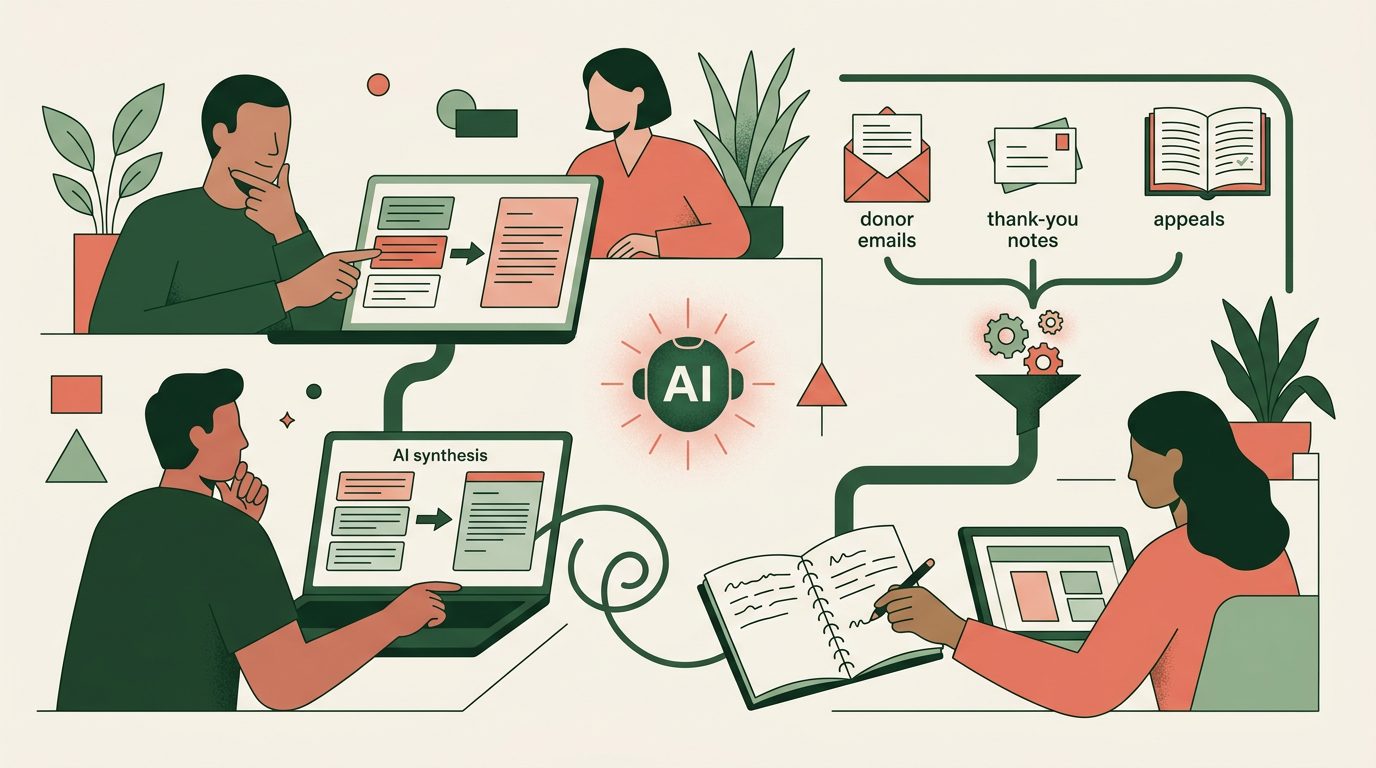
AI's greatest strength for charities lies in its capacity to assist with the initial stages of content creation. Think of it as a highly efficient, tireless junior copywriter who can produce a solid first draft in seconds. This can be particularly beneficial for smaller organisations with limited staff and resources, allowing fundraising teams to focus on strategy, personalisation, and relationship building.
Drafting First Versions of Communications
AI models excel at generating foundational text. This includes:
- Donor Appeal Letters and Emails: AI can help structure an appeal, suggest compelling language, and outline different sections, such as the problem, your charity's solution, the impact of a donation, and a call to action.
- Thank You Notes: Need variations of a thank you message for different donor segments? AI can quickly generate several options, saving time while ensuring your gratitude is eloquently expressed.
- Social Media Posts for Campaigns: Brainstorming multiple social media posts for a new appeal can be time-consuming. AI can rapidly produce diverse options tailored to various platforms.
- Newsletter Segments: Generating evergreen content or introductory paragraphs for your donor newsletter becomes much quicker with AI assistance.
- Subject Line and Headline Brainstorming: Struggling to find an attention-grabbing subject line? AI can provide a variety of options to test and refine.
"AI should be seen as a sophisticated co-pilot, not an autopilot. It helps you get to your destination faster, but you're always in control of the steering wheel and the final path taken."
The 'Proceed with Caution' Zone: Review, Edit, and Humanise
While AI can draft, it cannot, and should not, replace human oversight. Every single piece of content generated by AI for donor communications must undergo rigorous review and editing. This is where you infuse it with your charity's authentic voice, factual accuracy, legal compliance, and the genuine empathy that resonates with supporters.
Fact-Checking and Accuracy
AI models can sometimes "hallucinate," meaning they present false information as fact. This is a critical risk when dealing with sensitive and factual information related to your charity's work, impact, or financial expenditure. Always cross-reference any statistics, project details, or programme descriptions generated by AI with your internal records and verified sources.
Maintaining Your Charity's Unique Voice and Tone
Every charity has a distinct voice – whether it's compassionate, urgent, hopeful, or authoritative. AI can mimic styles, but it struggles to consistently replicate the nuanced emotional intelligence and specific vocabulary that defines your organisation. Treat AI's output as a template; it's your job to infuse it with the warmth, personality, and specific ethos of your charity. Develop a clear style guide and prompt AI with examples of your existing successful communications to help it get closer to your tone.
Personalisation Without PII: The Data Protection Tightrope
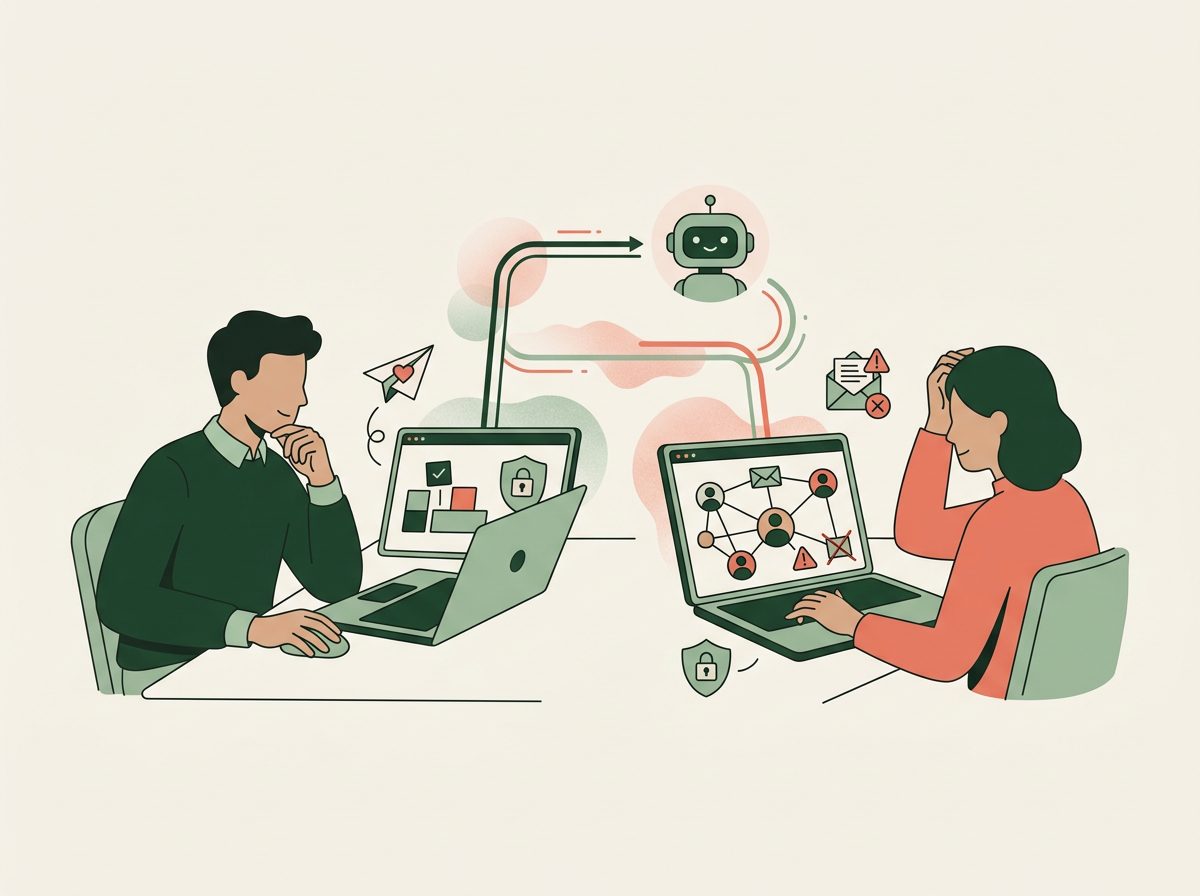
This is perhaps the most crucial aspect of AI use in donor communications. Under no circumstances should you input Personally Identifiable Information (PII) or sensitive personal data of your donors into public AI models like ChatGPT or Google Gemini. These models learn from their inputs, and while providers have data handling policies, you cannot guarantee the privacy of sensitive donor details in such environments.
Instead, focus on using AI to generate generalised content that you will then manually personalise using data held securely within your CRM. For example, you might ask AI to draft a thank you message for a regular donor, then manually insert the donor's name, their last donation amount, and a specific project they've supported.
| Action | Safety Status |
|---|---|
| Inputting donor names into public AI | UNSAFE |
| Anonymised impact stories (after donor consent) | SAFE (with careful prompts) |
| Generalised prompts for appeal structures | SAFE |
| Manually adding donor-specific details to AI drafts | SAFE |
| Inputting sensitive health/financial data into AI | UNSAFE |
The 'Absolute No-Go' Zone: Where AI Has No Business Operating Alone
There are some areas where AI should never operate autonomously in donor communications. These are primarily related to direct, unsent messages, and any task requiring genuine human judgment, empathy, or legal interpretation.
Automated Sending of Messages
Never configure an AI tool to automatically send emails, social media messages, or any direct communication to your supporters without human review and approval. The risks of errors, inappropriate content, or misinterpretations are too high and could severely damage your charity's reputation and donor trust. A misplaced comma or a tone that's slightly off can have significant repercussions.
Crisis Communications
In times of crisis, clear, precise, and empathetic communication is paramount. AI cannot grasp the nuances of a sensitive situation, the emotional state of your stakeholders, or the specific reputational risks involved. These communications require careful, human-led strategy and drafting.
Legal and Regulatory Compliance
AI is not a legal expert. While it can process information, it cannot provide legal advice or ensure your communications are compliant with charity law, fundraising regulations, or data protection legislation (like GDPR in the UK). Always ensure that a human with appropriate expertise reviews all donor communications for legal and regulatory adherence.
Handling Sensitive Donor Feedback or Complaints
Responding to donor feedback, especially complaints, requires a high degree of emotional intelligence, discretion, and problem-solving skills. AI cannot genuinely empathise or offer the personalised resolution that builds trust and loyalty in these sensitive situations.
Practical Steps for Integrating AI Safely
To successfully integrate AI into your donor communications strategy, adopt a structured approach that prioritises safety, ethics, and quality control. Start small, experiment, and learn what works best for your charity.
- Start with Drafting: Use AI initially for generating outlines, first drafts, and brainstorming ideas, rather than complete, ready-to-send messages.
- Develop Clear Prompts: The quality of AI output heavily depends on the quality of your input. Be specific. Provide context, desired tone, target audience, key message, and even examples of previous successful communications.
- Establish a Review Process: Implement a clear internal process where all AI-generated content is reviewed, edited, fact-checked, and approved by at least one human team member before being used.
- Train Your Team: Ensure everyone using AI understands its limitations, the risks of PII, and your charity's specific guidelines for AI use. Continuous learning is key.
- Document Your Use: Keep a record of how AI is being used in your communications. This can be helpful for internal audits and to refine your processes over time.
- Pilot and Iterate: Don't roll out AI use across all communications at once. Pilot it with a few types of messages, gather feedback, and refine your approach.
Future-Proofing Your Approach
The field of AI is advancing at an incredible pace. What's considered safe or cutting-edge today might change tomorrow. Charities need to remain agile and adaptable in their approach to AI. Keep an eye on developments, especially those related to data privacy and ethical AI use. Major AI providers are developing more secure, enterprise-level solutions that might become accessible to charities in the future, offering better data protection guarantees.
Ultimately, AI is a tool designed to augment human capabilities, not replace them. In donor communications, its role is to help you be more efficient and creative, freeing you to focus on the human connections that are the lifeblood of your charity's mission. By adhering to strict safety protocols, maintaining authenticity, and never compromising on human oversight, charities can leverage AI to build stronger, more impactful relationships with their supporters.
Next Steps
Consider conducting an internal workshop on AI ethics and data protection for your communications and fundraising teams. Develop a basic AI usage policy specific to donor communications, focusing on safe prompting guidelines and the mandatory human review process for all AI-generated content. Experiment with a few low-stakes communication pieces, such as drafting internal team updates or initial brainstorming for a campaign, before applying AI more broadly to external donor interactions. Always prioritise learning and continuous adaptation.